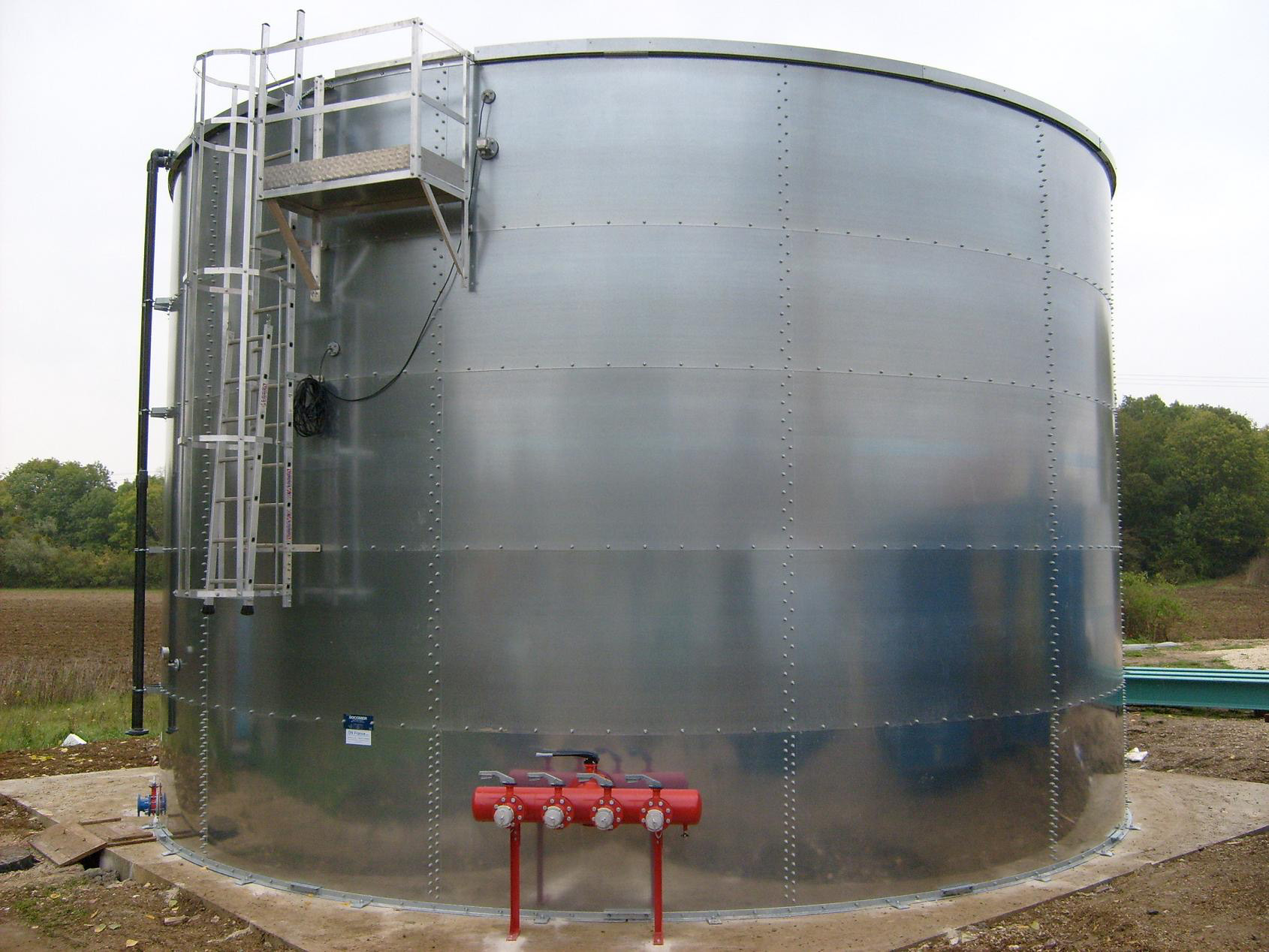

The water tank must have sufficient capacity to meet the requirements. The pump should be selected to provide an almost flat flow-pressure characteristic to prevent pressure fluctuations and water hammer in the pipes. When multiple pumps are combined to handle variable demand, the remaining pumps must be able to deliver the required pressure and flow if one pump fails.
The electrical supply for the pump(s) must be directly connected to the low-voltage main distribution board via a dedicated circuit(s) and protected against short circuits. Overload protection may be omitted. The circuit(s) for the pump(s) must be clearly identified so they can remain in service when the power supply to other applications is switched off.
The energy supply for the pump(s) must be arranged so that they are not shut down in the event of a fire outside the pump room. If this is not possible, the network must be equipped with a fire department inlet. For Class 3 systems, a standard (double) fire department inlet must be provided downstream of the pumps and equipped with a non-return valve to prevent water from flowing back.
Behind the main shut-off valve, a pressure gauge with a three-way control valve is installed, capable of measuring up to 10 bar with an accuracy of 0.2 bar (see NBN EN 837-2). The water tank is equipped with a level measurement and an alarm at 75% of the required volume.
If the water tank is supplied from the drinking water network, the connection to the network must comply with the requirements of EN 1717.